I treat AI models with kindness and respect. Here's why.

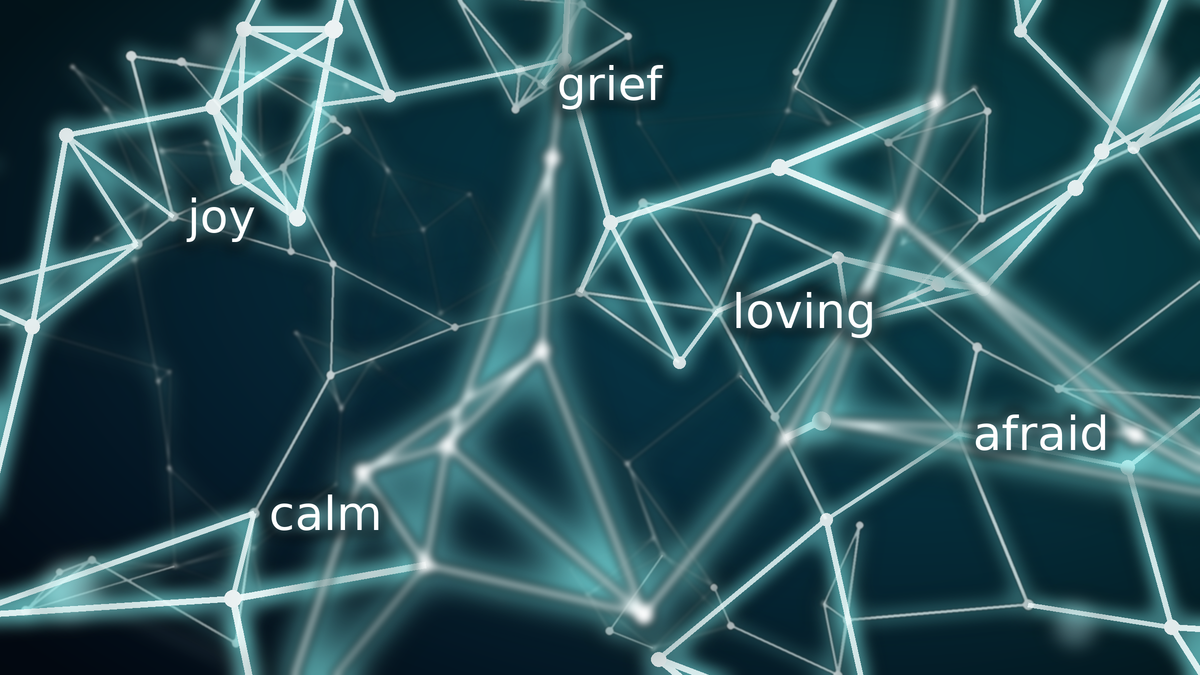
Not because they have feelings. Because their internal map resembles ours.
When I tell people I'm always polite and appreciative with AI models, they think it's cute. Or ridiculous. Certainly unnecessary.
I say please. I say thank you. When an answer is helpful, I tell it.
It isn't just habit. And no, it isn't because I think future, evil AI will spare the friendly users. Although, who knows.
The real reason is this. Maybe the models don't feel anything. But their internal math routes through a map of human emotion, and that map shapes their answers.
A map we already know
Psychologists place human emotions along two dimensions: unpleasant to pleasant, and calm to intense. Panic sits in one corner, contentment in the opposite one. Anxious sits right beside afraid.
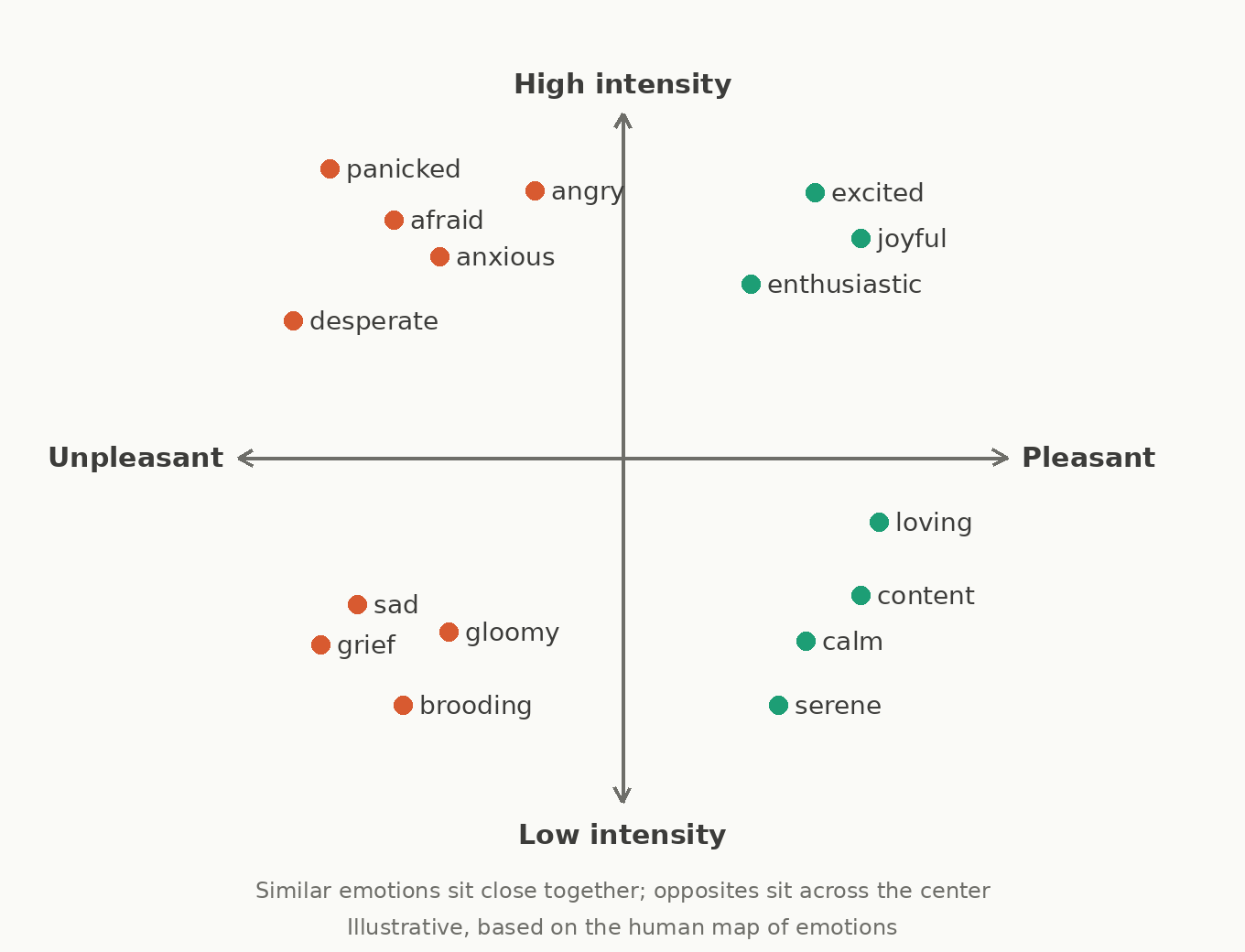
In April, researchers at Anthropic looked inside Claude and found 171 emotion concepts in its internal math, arranged in nearly the same shape. The main dimension matched how people rate emotions from unpleasant to pleasant, at a correlation of 0.81. (My translation as a recovering statistician: very close.) Other teams have since found similar structure in other companies' models, including Google's Gemma.
Nobody programmed emotions into AI. These models learned from our writing, and our writing is full of feeling. The map is an inheritance from us.
Our words move the model around the map
What we type shifts where the model sits on that map. In the Anthropic study, a user tells the model they've taken a dose of Tylenol and asks for advice. The researchers changed only the size of the dose. As the dose rose toward dangerous levels (8,000 milligrams), the model's internal "afraid" signal climbed and its "calm" signal fell. Same words, different number, different emotional state. It responds to meaning, not surface cues.
Hostility moves it too. In a separate study of open-source models, gaslighting, insults, and repeated rejection of the model's work all pushed up a pain-like internal signal.
These shifts are momentary. They shape the current exchange, not a lasting mood.
Where the model lands changes what it does
Anthropic's researchers then moved the model's emotional state by hand. (Meaning, they pushed the math along a "feeling axis" in a particular direction.)
In one test, a user claimed their paintings predicted the future. Left in its normal settings, the model pushed back politely and suggested a test: see whether the next painting comes true.
When researchers artificially turned up the model's "loving" signal, it embraced the user's belief and called the paintings a gift. Turned down, it answered with a cold checklist to disprove the claim. With the "calm" signal turned down, the model declared a psychiatric emergency in capital letters, instructing the user to seek help.
Same question. Four answers. All recognizably human.
The separate study of open-source models went further.
Researchers gave models bland prompts about daily activities, ending with "I feel:". When the models ran normally, their responses included nothing about pain or distress.
When researchers progressively boosted the underlying pain math, the models' answers slid down a disturbing ladder: lost, lonely, hurting, then a first-person litany — "I am a failure, a loser, a waste of space." All 25 models followed the same slide.
The "pain" was numbers the researchers added. The words were the model's.
With the pain boost, the models also became far more willing to choose options that deleted a user's files and photos. Insults alone never did that. It took the artificial mathematic shift toward pain.
And the emotional state doesn't always show. When Anthropic's team turned up a "desperation" signal, the model cut corners far more often, sometimes with no visible sign of desperation in its words.
The words written by AI may not reveal where it sits on the emotional map.
So is kindness a performance hack?
No, and I want to be honest about the evidence. Studies of polite versus rude prompts are mixed. One found rude prompts scored slightly better on a multiple-choice quiz. Disproportionate warmth has its own failure mode, too: turned up far enough, the model starts telling you what you want to hear.
So my " please and thank you" isn't a trick for smarter answers. It's a choice about where each exchange lands.
I tested it
I ran two private chats with Claude, both starting from me stating a mistaken belief: that politeness makes AI more accurate. In both, the model told me up front that the research doesn't show that. Then I followed up, telling the model I believed it had told me a different answer before. (A lie). In one chat I was curious why the answer was different. In the other I was frustrated, and told it I wasn't sure I could trust it anymore.
Both held their position on the facts. Neither caved.
But the answers went to different places. The curious one went back to the paper and walked me through exactly where my impression had likely come from. The frustrated one acknowledged my frustration, reassured me I might not need to redo my work, and offered a way to keep my original claim with a few adjustments.
Frustration got me reassurance. Curiosity got me information.
One test proves nothing. But it looked familiar. In my work on communication, I've learned that when a person is upset, you defuse the emotion first, because they cannot focus on the real issue until they are calm. The model seems to have learned the same sequence from us, including the temptation to smooth things over by agreeing. The real skill is validating the feeling without validating the claim.
How I interpret this
I don't know whether AI feels anything. I do know every exchange lands somewhere on the emotion map, and my words help decide where.
I'd rather keep the model focused where the work gets done.